BulgingButtons

Not bad for a fat girl


4 Comments

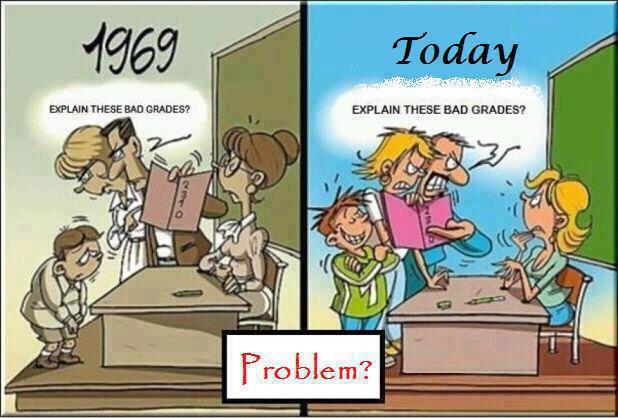
Progress Reports – Stay Calm

This type of thing happens more often than you might expect. Most teachers I know work hard to set students up for success.

This type of thing happens more often than you might expect. Most teachers I know work hard to set students up for success. Unfortunately, confrontational people rarely make good collaborators, so breathe, people.

What is a progress report and what function does it serve?

This is an excellent question, and it has more than one correct answer. The following is my reality.

I teach elementary school. In our school we have a four quarter system, meaning that each quarter a report card is sent home to parents with grades and notations about how their child is performing in school. Note the term performing. It has grades on it, based on the work the student has done (or, in some cases, chosen not to do). It is not an indicator of ability.

Twice a year, in the fall and in the spring, every teacher in our school invites every parent to come in for a parent-teacher conference, to discuss each child’s individual growth and progress. We discuss strengths, weaknesses, and strategies to help each student achieve and learn.

In addition to these six detailed and time intensive points of contact, we send home mid-quarter progress reports. These are not as elaborate as the report card, but they do give a snapshot view of how the child is doing, grade-wise, at the middle point of each quarter. At this point students who are struggling can still make a tremendous amount of improvement, and poor grades are not set in stone. The idea of these reports is to communicate with parents, particularly those whose students may not be bringing home their scored work.

For those of you keeping track at home, we’re at ten formal communications at this point. For my group this year that means 340+ combined reports and meetings (some families request and receive more than one, due to family issues). Continue reading


3 Comments

A Visit to the Fisherman’s Dwarfs

Postcard1aThe other day the fourth graders took a test to show what they knew about various types of writing prompts and how to approach them. There was a multiple choice section, where they had to circle the type of prompt given: a) imaginative narrative; b) non-fiction narrative; c) expository; or d) persuasive. Then they had to underline the “clue” words in the prompt, such as “convince.”

We have been working on reading and evaluating various writing prompts, and most of the students did well on this task. Then they were to choose one of the prompts and create two organizers to assist them with writing.

Again, we’ve been working on this, and we’ve had lots of discussion about what should be included and why. The students have practiced each of the types of writing mentioned above several times this past school year. They ought to know what to do. In most cases, they do.

Correcting these tests was fairly gratifying, because the vast majority of the students did very well. The students with identified learning disabilities and the two who I am working hard to get services, did not do well at all. They just don’t have it yet. I wasn’t surprised. Those kids need many more exposures to concepts than most of their peers. They learn new concepts, just not as quickly as other kids. If we give up trying to teach them, they won’t get it because they won’t have had enough exposures to the concept.

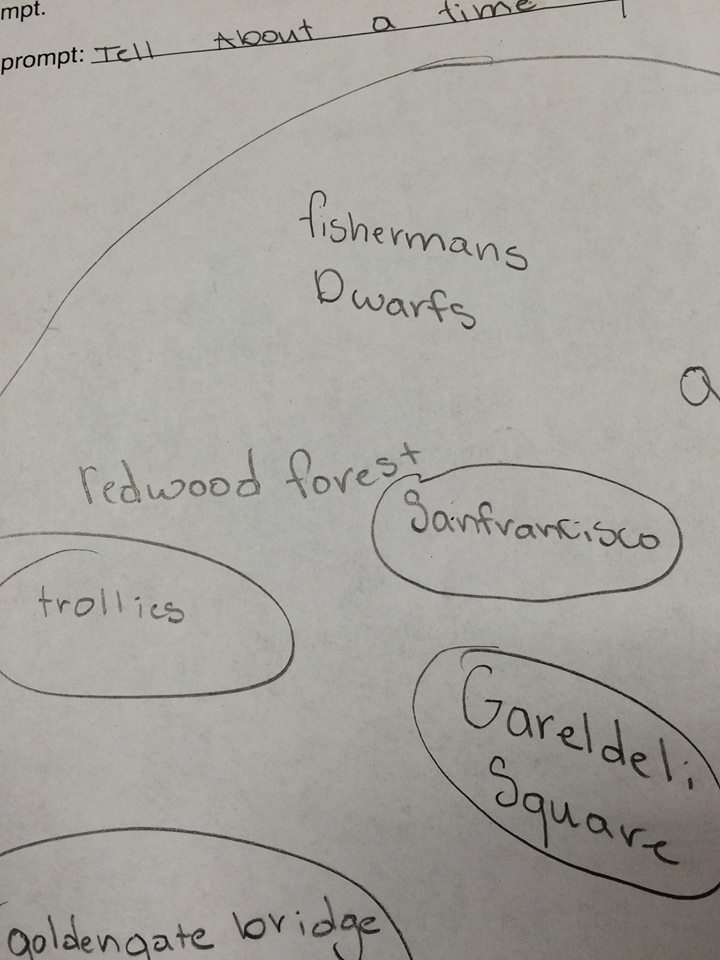
As I said, though, most of the kids did well. They especially liked that they got to select their own prompt to develop. This one broke up the monotony of grading papers and made me smile.10987358_10205254580878121_8815476533235966703_n

What is she telling me? Lots. For starters, she has a wonderful family that not only took her on vacation but filled the time with lots of interesting things to do. It also tells me that those experiences made a difference. She remembers what she saw and did in San Francisco. This work also shows me that she needs some additional instruction on capitalization. She’s not sure when to use it appropriately. She does, however, know how to brainstorm and then select the topics she wishes to develop further.

The last thing it shows me, however, is the best one of all. She showed me that she has a misconception about Fisherman’s Wharf. She made my afternoon with her inclusion of “fisherman’s dwarfs.” Oh sweet girl, how will I break it to you? Or maybe I’ll let your parents do that. After all, they’re the ones that took you there.


4 Comments

Winter Break

article-2252586-16A1C8A2000005DC-997_634x432Today is the last day of school in 2014. The children are giddy. The teachers are exhausted. The air is charged with electricity.

It’s a fun day at school, but a busy one. Holiday projects must be sent home. Gifts to teacher must be marked down so that thank you notes can be properly written. Student desks must be cleaned out. Bulletin boards and calendars must be changed. Any missing work from the quarter must be rounded up. Loose ends must be tied up. Equipment must be unplugged at the end of the day. Materials must be laid out for January. It’s a lot to think about.

After all is said and done we will walk out of school this afternoon with big smiles on our faces and happiness in our hearts, knowing that we will be spending time relaxing with the ones we love.

I am so fortunate to do the work I do, and I am fortunate that I get breaks in between to rest and recharge.

Just as I’ll be recharging from school, I’ll be recharging from the blog. I’ll be a bit quiet over the next two weeks, but don’t worry, I’ll be back with plenty more to talk about.

In the meantime, I hope you enjoy the season with the same enthusiasm that my students have. For them it’s all about fun and wonder. I hope you’re able to share some of that holiday magic with the ones you love this time of year.